National Geographic "100 Best Pictures" Download
Steve McCurry needs piffling introduction. He has been one of the most important figures in photography for more than four decades.
The multi-award-winning photographer has taken some of the most recognizable images in the history of photography, including his iconic 1984 prototype Afghan Girl, arguably the most famous portrait of the 20th Century.
His photos have been featured in every major magazine in the world and he has been a fellow member of branch photograph agency Magnum since 1986.
McCurry began his career every bit a printing photographer in Pennsylvania earlier traveling to Republic of india to work as a freelance photographer.
His coverage of the 1979 Soviet invasion of Afghanistan, which he slipped beyond the border from Pakistan to photo, won him the Robert Capa Gold Medal.
Since then, he has gone on to take many iconic images that tell stories of people, places, and cultures around the world.
You could call him a photojournalist, documentary photographer, or even a portrait photographer, but McCurry shoots with the simple objective of capturing images that volition stay with the viewer for a very long time.
When y'all wait at a Steve McCurry photograph you just don't just wait at it, instead, you lot are fatigued into it: at that place's a sense of mystery and timelessness about his photos that make them unique.
[He] brings you into the photograph… because of the shadow and lack of calorie-free perchance, and also because of the color palette. And in one case you are in the picture you lot realize you are caught.
John Echaves, National Geographic
In this article, we'll await at Steve McCurry's background, photography manner, and share his tips and communication for better photography.
Related: 57 Steve McCurry Quotes to Advance your Photography
As ever, if you relish the article or observe it helpful then we would be grateful if you could share with other photographers on social media, forums, or even your website.
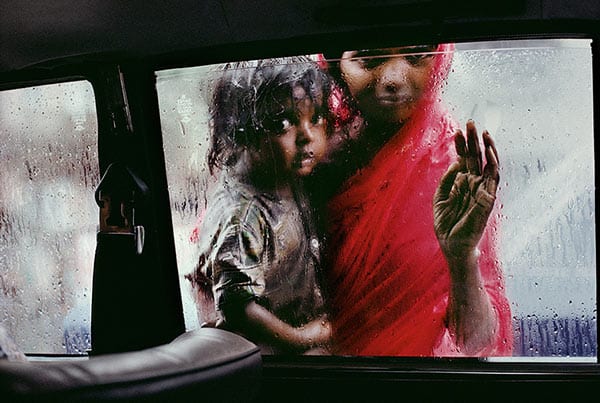
Steve McCurry Biography
Proper name: Steve McCurry
Nationality: American
Genre: Photojournalism/Documentary, War, Portrait, Travel
Born: April 23, 1950 (Philadelphia, USA)
Early on Career
Steve McCurry began his photography journey whilst at Penn State Academy, where he studied cinematography and moving-picture show. He started out wanting to be a filmmaker, but after working for the college newspaper, he adult a passion for withal photography.
Subsequently graduating, McCurry looked for a job in the motion-picture show industry but ended up getting a job at a local newspaper as a photographer, where he stayed for iii years.
When I left I was torn betwixt stills and pic making and could accept gone either way. What decided information technology was that I couldn't go a chore in the film industry, but did manage to become 1 on a newspaper. I've never regretted this decision.
Steve McCurry
In 1978, he left his task and ready off for Republic of india for a short cocky-funded consignment, carrying merely a small bag of clothes, another purse full of film, and two pic cameras.
I researched story ideas before I left and I hit the basis running. I was fascinated with the colour, vibrancy, culture, people, geography and the monsoons in Republic of india.
Steve McCurry
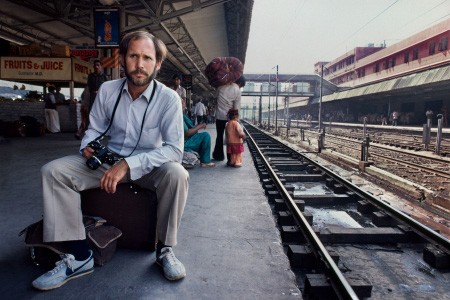
Disharmonize Photography
After eighteen months on the road, he found himself in Pakistan, where he came across Afghan refugees.
While I was upward in the due north of Pakistan, I met some Afghan refugees who invited me to get into their country and encounter what was happening…
The story they told him piqued his interest, and he followed them dorsum across the border into Transitional islamic state of afghanistan to photo the civil war. However, his journey to the rebel-controlled state was not an easy one.
He disguised himself by growing a full beard and wearing traditional Afghani attire, then snuck across the border through the mountains of Pakistan and into Afghanistan. The Russians invaded in late 1979, and McCurry plant himself every bit the only working lensman on mitt to shoot the invasion.
When he left the country, he hid his pic inside his clothing – sewn into the folds of his turban and stuffed into his shoes and underwear.
Every bit I was set up to get out, I got very nervous that when I crossed back into Pakistan, my flick would be confiscated. So I put my flick in my socks and my underwear. I sewed some of the moving-picture show into my costume and into my turban, so that if I were arrested, I would at least keep my moving-picture show safe. I wasn't arrested.
I got a few pictures published in The New York Times. And when the Russians invaded six months afterward, I had all these pictures that nobody else had. Suddenly major magazines around the world – Paris Lucifer, Stern, Time, Newsweek, and LIFE — were using my pictures."
Steve McCurry
The resulting photographs – among the start photographic evidence of the conflict – were published in The New York Times, Time Magazine, and other newspapers around the earth.
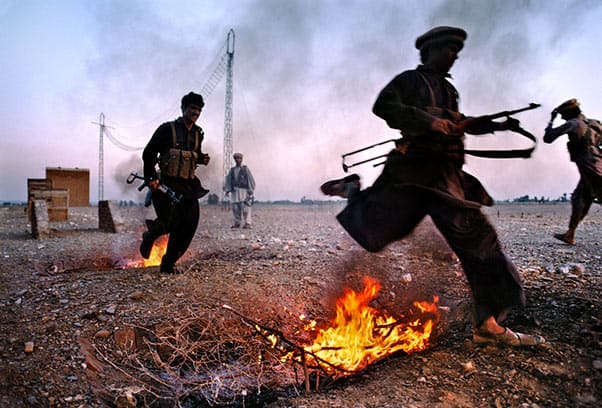
Recognition and Awards
The pictures opened the door for many other assignments and helped McCurry land his first National Geographic assignment in 1980.
When I crossed the border to Transitional islamic state of afghanistan in 1979, but in time to document the Russian invasion, I didn't dream that the country and her people, would have such a profound influence on my piece of work and my life.
McCurry's Afghanistan photographs won him the Robert Capa Gold Medal in 1980 s – an accolade that commends photographers for their courage and enterprise.
After his critically acclaimed Afghan State of war coverage, McCurry continued to deliver regular photograph reports from international conflicts – including the Iran-Iraq State of war, Yugoslav civil war, the Cambodian Ceremonious War, the Gulf War and the Lebanese Civil State of war – while returning once again and again to Afghanistan.
In contrast to the more conventional state of war photographers like Don McCullin, Larry Burrows, and to a bottom extent, James Nachtwey, McCurry'due south pictures highlight the human cost of disharmonize and the effect of war on innocent bystanders.
I look for the unguarded moment, the essential soul peeking out, experience etched on a person's face. I try to convey what information technology is like to exist that person, a person caught in a broader landscape, that yous could phone call the human condition.
Steve McCurry
The Afghan Daughter
In the 1980s, while photographing at a refugee military camp in Afghanistan, McCurry took his best-known photo – "Afghan Daughter" – a powerful portrait of a young girl with haunting dark-green optics (finally identified in 2002 as Sharbat Gula).
The prototype became one of the best-known covers for National Geographic and touchstone in his career.
McCurry snapped the image in a affair of minutes back in December 1984, within a tent in a refugee military camp in Islamic republic of pakistan during the Soviet occupation of Afghanistan; only he didn't record the daughter's name, never imagining the power the picture would have.
One day in 1984, at the refugee camp very close to Peshawar (Islamic republic of pakistan), I heard voices coming from one of the tents. It was a makeshift school for young girls. I asked the instructor there if I could take photographs.
Her eyes were the start matter that struck me. What interested me in that classroom that morn was actually that particular daughter. I photographed other girls, but that was more than merely trying to position myself so that I could photograph her. She seemed pretty shy, a footling bit troubled. I shot a few frames of her.
I spent near five minutes photographing her and then she speedily ran off to play with her friends. It was one of those cases, where all the elements of the motion-picture show came together in a magical way.
Steve McCurry
McCurry shot the photograph on Kodachrome 64 film using a Nikon FM2 and Nikon 105mm F2.5 AI-S lens.
In June 1985,the photo appeared on the cover of the National Geographic magazine. Information technology would afterwards characteristic on the cover of the National Geographic 100 Best Pictures collector's edition in 2001. It is too named "the most recognized photo" in the entire history of National Geographic magazine.
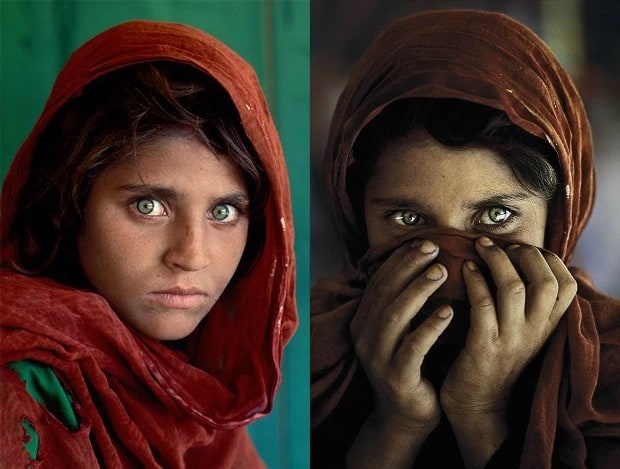
I can understand why it moves people: she'south mysterious, ambiguous. She's cute, still she'southward troubled. She'southward persevering, at that place'south a fortitude in her. She's poor, but she's not timid. Information technology's a picture yous can come up dorsum to time and time once again.
Steve McCurry
Incidentally, the photo editor at National Geographic chose another image of Sharbat Gula in which she was covering her face to run as the cover for the magazine. Just earlier the magazine was to get to print, the magazine editor vetoed the photo editor's choice and decided to run with the iconic photo nosotros all know instead.
The photograph would later represent to the world the plight and courage of the survivors of the Afghan State of war in the 1980s.
The Afghan Daughter Re-Visited
The image resonated so strongly that nigh seventeen years later, in belatedly 2001, with new turmoil in Afghanistan, the National Geographic Lodge and McCurry, launched an ambitious attempt to find the long-lost girl who had become an icon in the West.
In January, she was institute living in poverty in the war-torn state, and McCurry photographed her once more. This time he learned her proper noun: Sharbat Gula.
She was a hit little daughter with an astonishing wait. I knew when I saw her it was going to be a powerful portrait. Simply her parents had been killed and life was difficult for her. When I began to search for her again I was told she had died in childbirth or been killed, but 17 years later nosotros establish her. Information technology'due south a very conservative place at that place, merely we were happy we found her and [I was] relieved she was live. I call back she was happy she came to correspond Afghanistan.
Steve McCurry
Steve McCurry's Legacy
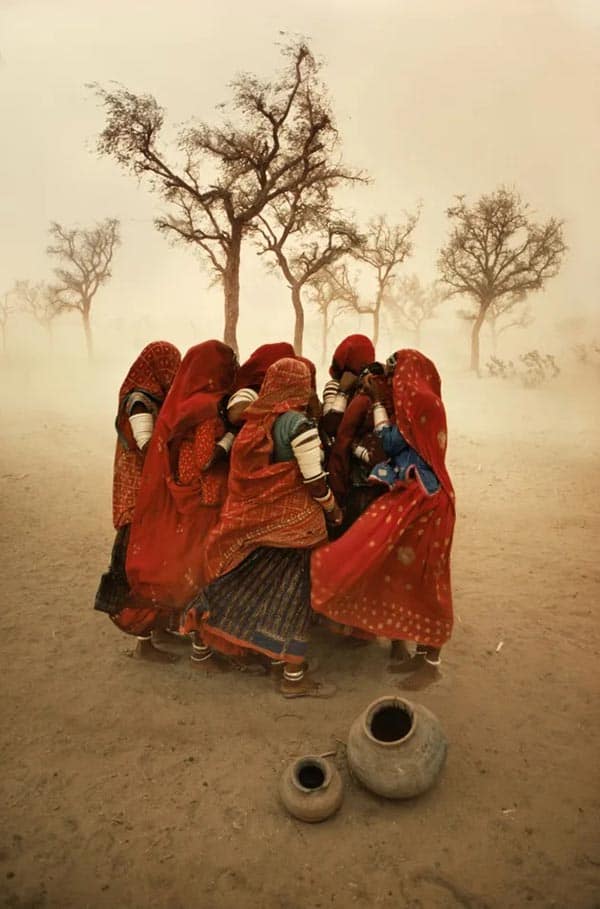
In his 40 twelvemonth career as a photographer, Steve McCurry has traveled to the far corners of the globe to shoot conflicts, landscapes and cultures. But the 1 region that continues to occupy a special place in his eye is Asia.
The affair that fascinates me about this region is that we're all playing these different roles just we're all office of the aforementioned human being race. Nosotros're the aforementioned, but we exercise things in different means. We eat different foods, live in different houses, speak different languages.
Steve McCurry
Whatsoever the setting he happens to exist shooting in, the emotional focus on his documentary photography invariably returns to the human factor. His analogousness for photographing people has distinguished his piece of work from others and has helped him earn countless awards.
McCurry has had several close calls – he was arrested in Pakistan, about drowned in a aeroplane crash at ocean in Slovenia, browbeaten up by a mob in India – and has been reported dead at to the lowest degree twice.
The part of my encephalon that's concerned with self-preservation is very large. I always attempt to work within a margin of safety. You have to be alarm and conscientious – and hope for the all-time.
Steve McCurry
Pirelli hired McCurry to lens the 40th edition of their famous agenda in 2013. The tyre visitor headed to Brazil and in a interruption from tradition, the models were shot with their clothes on in the heart of Rio de Janeiro.
In 2015, McCurry was commissioned by Microsoft to take photographs in New Zealand, which were later used for their Windows 10 software.
Awards and Achievements
Aside from the Robert Capa Gold Medal in 1978, McCurry was awarded the Magazine Photographer of the Year laurels in 1984.
He also holds the distinction of having won four beginning prizes at the Globe Press Photograph Contest and the Olivier Rebbot Memorial Award twice.
In 2002, he was named Lensman of the Twelvemonth by American Photograph Mag and the PMDA (Photograph-imaging Manufacturers and Distributors Clan).
Steve McCurry founded ImagineAsia in 2004. The non-profit organization aims to work in partnership with community leaders and regional NGO's to provide educational resource and opportunities to both children and young adults in Transitional islamic state of afghanistan. You tin can learn more well-nigh the project by visiting the ImagineAsia website.
McCurry received two Honorary Fellowships in 2006, one by the Majestic Photography Society of Great Britain and the other past the New Zealand Constitute of Professional person Photography.
His work has been widely published internationally and McCurry oft contributes to the National Geographic. In 1986, he became a member of the prestigious Magnum photos.
In 2019, Steve McCurry was finally inducted into the International Photography Hall of Fame.
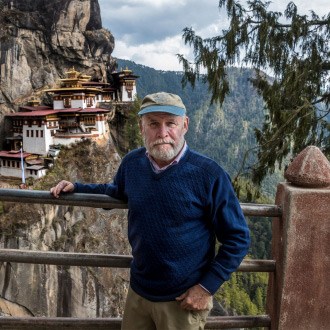
Style
- Reportage, documentary
- Capturing mood, human spirit
- Use of color to create atmosphere and sense of place
- Storytelling, narrative-driven
- Simplicity, run a risk
- Immersion into community, getting to know subjects
How to Shoot Like Steve McCurry
Steve McCurry's long association with National Geographic has afforded him opportunities to accept months-long assignments in locations all over the world.
When on assignment, McCurry usually travels with locals who serve as administration, guides and translators, he oftentimes wears native garb and tries to blend in with his surround.
A lot of what I do is just wandering and observing. I might run into someone on the street and feel there is some story written on his or her face up.
Similar well-nigh photographers, he researches a land beforehand and draws up a list of locations, but once on location he lets the journey dictate what to shoot instead.
I always try to striking the basis running. I attempt to accept a translator lined up every bit an assistant; this is the main matter. It's always adept to have someone who tin speak the local language, and who can navigate where to become and help if at that place's a problem. Simply as far as research goes, I don't ever want to exercise likewise much of it because, if y'all go with too many preconceived notions, it can spoil things.
Steve McCurry – Interview with Amateur Photography Mag
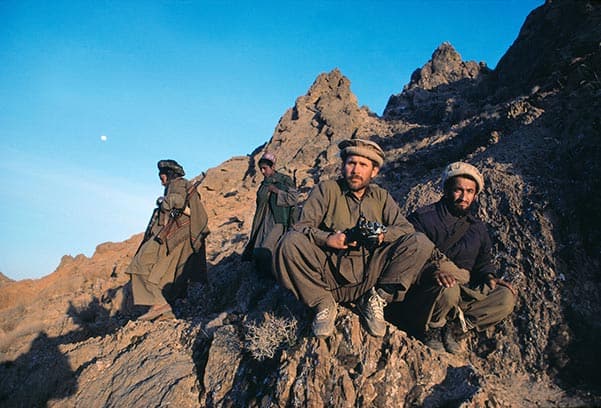
Preparation and Good Light
McCurry plans his shooting days around the light. He prefers to shoot in soft low-cal and heads out in the forenoon or evening (magic hour) when the light is at its near flattering.
During the twenty-four hour period when the lord's day is shining and the light is harsh, he'll head indoors and shoot temples, markets, shops, etc
I try and set upwardly my shooting day to exist in a place where there is favorable calorie-free the whole solar day. In the morning, I might be outside. In late morning, I might exist inside, and so I'm e'er in a place where the light is working with me.
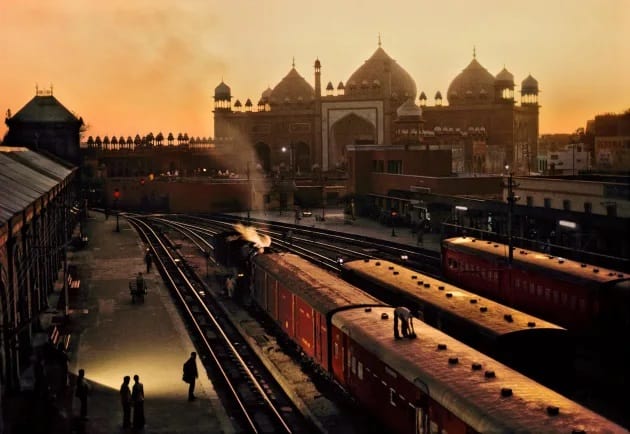
Working on Assignments
McCurry doesn't look for pretty landscapes to shoot but instead focuses on story and the people of the state he is covering. His greatest photos are never planned, instead, he relies heavily on chance and happy accidents to occur to get the perfect motion-picture show.
You tin can't get hung upward on what you recollect your "real" destination is. The journeying is only every bit important.
McCurry used to spend up to six months on an assignment for National Geographic but today his photo assignments tend to be much more than focused, and over shorter periods.
You don't need to spend six months or a year photographing everything that moves. You lot're shooting stories, not novels. It'southward ameliorate journalism and information technology needs more thought. For instance, you wouldn't go to Brazil with the idea of shooting the whole country. You'd take less time and do a region, or mayhap Rio.
What is important to my work is the private picture. I photo stories on assignment, and of form, they take to be put together coherently. But what matters most is that each picture stands on its own, with its ain place and feeling.
Steve McCurry
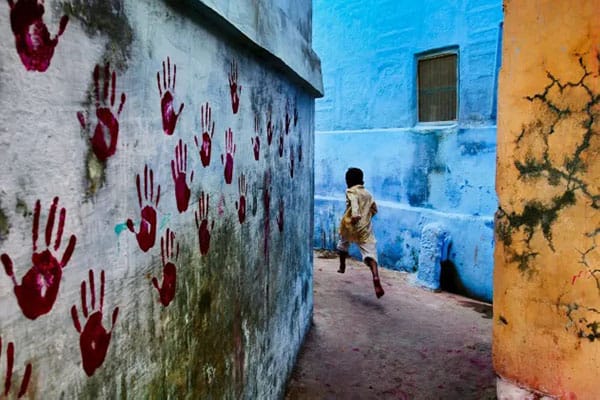
McCurry'south Photography Philosophy
McCurry believes at that place are no shortcuts in photography and producing consistently great photos comes from hard work and dedication to the arts and crafts.
The unfortunate thing in life is that there is a lot of work involved, and often it's tedious piece of work. Some people buy a camera and expect around to get assignments. It's wonderful they're that naive. It'south like telling me y'all've got a first-aid kit and so at present y'all're a brain surgeon. You have to notice your own manner.
Even if you don't experience similar it, you withal demand to become your photos on the assignment. The more photos you take, the more run a risk yous accept of capturing that corking image.
Sometimes we're productive and sometimes nosotros're not, but you lot really have to average it out. Some days are good, some days aren't, and you just have to understand that and relax. Information technology'due south like playing roulette: somewhen, 22 is going to come up up. I mean, fifty-fifty Shakespeare probably had an editing process.
Steve McCurry
Don't be agape of failure and making mistakes, fifty-fifty groovy photographers similar Steve McCurry accept bad photos – the departure is he doesn't show them to the rest of the world.
Yeah, non every picture is brilliant! A writer might write something that ends up just staying in the notebook, and for a photographer… you photograph some things that y'all know are only as a record or something that yous know isn't vivid, simply y'all get the wheels moving. Am I going to wait for the perfect film before I offset shooting? Well, how many perfect pictures are there in a lifetime? Get out and kickoff examining the world, first probing, and eventually…
Non all your photos are going to be keepers, the simply thing that matters is the end result.
And in the end, you're but judged on the work. People await at the work – a poem, photo, sculpture, any – and they don't call up, 'How many drafts went into this, was it edited, how long did it have, how many revisions?' Information technology'southward but the piece of work that matters – you lot put it on the tabular array, and either it speaks to you or it doesn't.
Steve McCurry
In his moving-picture show days, McCurry would shoot on average 30 rolls of flick in a mean solar day. That translates to 1,080 images per day or 30,000 images on a one-month assignment that need editing, scanning, archiving and retouching.
The Human Connection
McCurry crosses borders of language and culture, in search of interesting stories that make for great photography.
I always have a connection with the subject field, whether it's in a refugee camp or in a suburb of Mumbai. I ever try and establish some sort of a personal human relationship, however brief. There are too times when y'all may exist walking downwardly the street and you photograph people in a fraction of a second. Sometimes the image looks as though information technology was the production of a long interaction when in fact, information technology was very brief.
Steve McCurry
One of the reasons McCurry's work is so powerful is because it focuses on humanity and life, a field of study that we can all relate to.
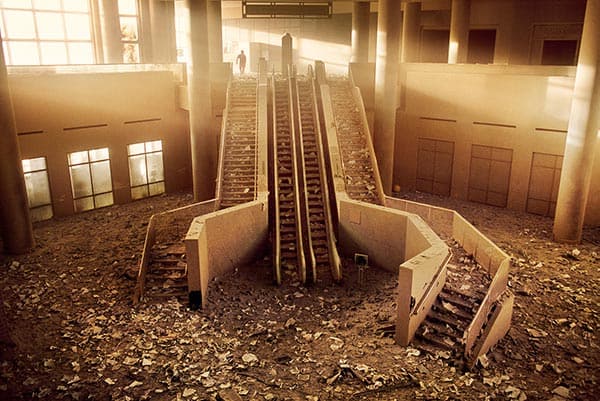
A perfect case of this is his post-September 11th coverage of Footing Nix.
McCurry pays a touching tribute to the hundreds who lost their lives, and also the many heroic policemen and firemen who worked tirelessly to get New York back on track.
It isn't necessarily nigh capturing the story only instead capturing the stories of the people affected by the tragic event.
Capturing Portraits
When it comes to his street portraiture, McCurry takes very few aboveboard photos. Working with an interpreter, his portraits are made with his subject field's permission and typically from a close distance.
The one thing that all McCurry's portraits accept in mutual is the focal point is the eyes of his subjects. He e'er tries to incorporate catchlights into the eyes of his bailiwick too – this helps lift his images and gives them a certain spark/or pop.
This is achieved 99% of the time through his use of natural lite (after many years of experience).
He never uses strobes but does carry small portable LED lights, which he uses to accentuate certain things in some situations.
Related Article: 150+ Portrait Photography Quotes
McCurry tends to isolate his subjects by shooting between f/2.8 and f/5.6 – just enough so his subjects stand up out from their surroundings.
McCurry's portraits are simple, yet they possess a magical quality about them. I consider his portrait piece of work more documentary than classic portraiture (retrieve Yousuf Karsh and Richard Avedon).
I think people, when you first encounter them, they try and put on a particular mask. I don't want people to try and expect a certain way. I want them to be completely natural and just themselves, without kinda grinning, or smiling, or putting on some kind of silly expression.
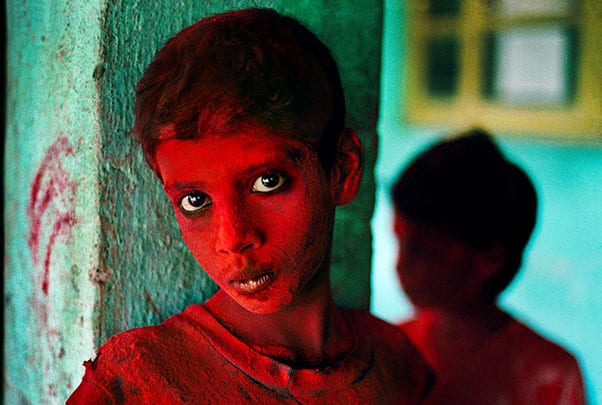
His best portraits portray his subjects in their environment and there is very little interaction betwixt the photographer and the field of study. The key is to take your subjects forget they're being photographed and to exist patient.
In a portrait, you want something of that person to reveal itself. Some portraits expect also controlled. I like to see the naked personality; I want to see something that is real and something that is raw. You don't encounter the hand of the photographer; you lot meet the uniqueness of that person.
Steve McCurry
Take McCurry's most famous photo, The Afghan Girl. McCurry spent five minutes photographing the refugee military camp earlier finally taking a few frames of the shy and curious girl with dark-green optics.
The portrait was essentially a catch shot. The candid image was taken more like a documentary photograph, rather than a straight portrait.
If you expect, people will forget your photographic camera and the soul will drift upwards into view.
Steve McCurry
In the video beneath, Steve McCurry talks to Huxley studio about portraiture and his process:
Good Photography and Storytelling
McCurry is known for his brilliant color imagery and use of Kodachrome movie. His reasoning behind this is uncomplicated: we see the world in color, then it makes sense to shoot information technology in color.
Beneath he explains how to brand a adept colour photo:
I call back the mode to place a proficient color photograph is to ask yourself if you lot convert information technology to blackness and white does it still take interest? Does it still have value? That would make a good story idea: permit's look at a series of color photographs, permit's just break it down, run across how they piece of work: the light, the design, the graphic quality. If it'due south a good moving-picture show, whether information technology's been shot in color or in blackness and white, so it's successful.
On what makes great documentary photography:
I think good documentary photography, on its highest level, gets into a realm where you've tapped into some archetype of human connection. You've struck a chord in people that has tremendous meaning beyond the event itself.
On the importance of storytelling in photography:
It's similar to when y'all hear a song on the radio. At that place are some songs you connect with and others yous don't. Information technology'due south the aforementioned with books and movies. Pictures that are memorable, that stick in the heed, are the best pictures. Sometimes I'm looking at pictures and there's nothing going on; at that place's no emotion.
For me, bang-up pictures are well-nigh storytelling. I want to learn something from the picture or want it to evoke some kind of emotion. I desire it to accept me somewhere.
Steve McCurry
If you want to learn more than about Steve McCurry'south working process and the stories behind his most famous images then I highly recommend purchasing his book Steve McCurry Untold: The Stories Behind the Images
What Photographic camera Does Steve McCurry Employ?
Steve McCurry uses a Nikon D810, which he has called the all-time camera he has ever owned.
I completed a major assignment a couple of weeks ago and used just a D810 and a 24-70mm lens forir the entire job. I use that lens for nigh 98% of my work at present. When I'm walking on the street, I'll accept just one trunk and one lens. I'll have a back-up trunk and lens back at the hotel, just in case.
McCurry likewise likes to use a unmarried prime lens when he'due south wandering the streets. Another favorite lens of his is the inexpensive and lightweight Nikon AF 35-70mm F/2.8D.
McCurry was an early tester of the Leica SL2 and did a promotional video for Leica in 2019.
[I have] virtually no interest in equipment – menstruation. Information technology's not what motivates me. I don't want to talk about gear. Whatsoever camera on sale today will requite you lot wonderful results. It's how y'all exercise what you do, and whether you enjoy your photography. Manufacturers want to sell their cameras, and their ads are the aforementioned now every bit they were 30 or 40 years ago.
Steve McCurry
Other cameras he has used over the years include:
Digital: Nikon D810, Nikon D4, Nikon D3, Nikon D700, Nikon D2X
Film: Nikon FM2, Nikon N90S, Nikon F5, Nikon F4, Nikon F100, Olympus OM2N
My first photographic camera was a Miranda. Then I switched to a Pentax and so an Olympus. When I went to India in 1975 with my girlfriend, she had a Nikon and some lenses. I thought we should merely utilize the same camera system and share the lenses, so I switched to Nikon, and I've been using it ever since – dissimilar models, of class.
The Last Roll of Kodachrome
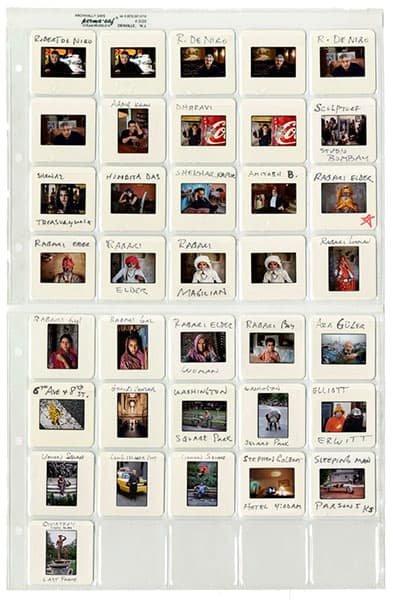
McCurry moved beyond to digital in 2003, but for over twenty years he used Kodachrome movie. When Kodak announced that they would be discontinuing Kodachrome 64, McCurry wanted to pay homage to the film that he used to create his almost iconic images.
Kodak agreed to provide him with the last curl of Kodachrome ever made. For the projection, he wanted to photograph iconic people and places. He started off in New York and did a portrait of Robert de Niro. Then he went dorsum to India where his journey began and photographed Bollywood flick stars and village nomads.
To complete the projection, he fabricated i frame per subject, using his digital camera to check the exposure and composition, similar to using a polaroid camera.
The picture show was processed in July 2010 at Dwyane's Photo in Kansas. Many of the images were published on Vanity Fair'southward website. These images are now exhibited in the museum at George Eastman House, in Rochester, New York.
Notation: Meet the recommended videos below to watch the total documentary.
Other Steve McCurry Resources
Recommended Steve McCurry Books
Disclaimer: Photogpedia is an Amazon Associate and earns from qualifying purchases
- Steve McCurry: The Iconic Photographs, 2012
- The Stories Behind the Photographs, 2018
- Steve McCurry: A Life in Pictures, 2018
Steve McCurry Videos
The Last Roll of Kodachrome (2010)
In Search for the Afghan Daughter (2002)
Behind the Scenes: Pirelli Calendar (2013)
For more Steve McCurry videos we recommend subscribing to his official YouTube aqueduct.
Steve McCurry Photos
Looking for more Steve McCurry photos? Check out the image archive on Steve McCurry's website.
Fact Check
With each Lensman contour mail, we strive to be accurate and off-white. If you see something that doesn't expect right, and so contact united states of america and nosotros'll update the post.
If there is anything else you would similar to add nearly Steve McCurry'due south work then ship us an electronic mail: hullo(at)photogpedia.com
Link to Photogpedia
If yous've enjoyed the commodity or yous've found it useful and so we would exist grateful if you could link back to us or share online through twitter or any other social media aqueduct. This article took 7 days to enquiry and write. Sharing the link takes less than 2 minutes and doesn't cost anything.
Finally, don't forget to subscribe to our monthly newsletter, and follow united states of america on Instagram and Twitter.
Sources
Official Steve McCurry Website, Biography
PDN Gallery, Q&A with Steve McCurry
American Photo Jul-Aug 2006
Steve McCurry: The Iconic Photographs, 2012
Pirelli calendar turns over a new foliage, The Guardian, 2012
It's All Mixed: An Interview with Steve McCurry, GUP Mag, 2013
Iconic 'Afghan Daughter' Portrait Was Almost Passed Over past Editor, Peta Pixel, 2013
The Steve McCurry Interview, The Sartorialist, 2013
Leica Stories, Leica SL2, Nov 2013
Due north Photo Magazine, March 2014
Steve McCurry: The interview, Australian Photography, 2017
Steve McCurry: The Iconic Photographs, 2012
The Stories Behind the Photographs, 2018
A Life in Pictures, 2018
The Concluding Roll of Kodachrome, 2010
In Search for the Afghan Girl, 2010
Magnum in Motion: Steve McCurry, 2011
Behind the Scenes of Pirelli Agenda, 2012
The Stories Behind the Photographs Promo Video, Phaidon, 2013
An Interview With Steve McCurry, TEDxAmsterdam, 2015
Steve McCurry on Portraiture, Huxley Gallery, 2020
DOWNLOAD HERE
Posted by: clineancour.blogspot.com

Post a Comment for "National Geographic "100 Best Pictures" Download"